THE MOSIN BOUTIQUE • TEXTILE JOURNAL / ISSUE 01

Seven beautiful weaves.
One Tamil Nadu.

From Chinnalampattu’s soft charm to the enduring grandeur of Kanchipuram silk: an editorial journey through the sarees, techniques and little details worth knowing.

Handloom sarees in Tamil Nadu — a reader’s guide to seven distinctive styles.

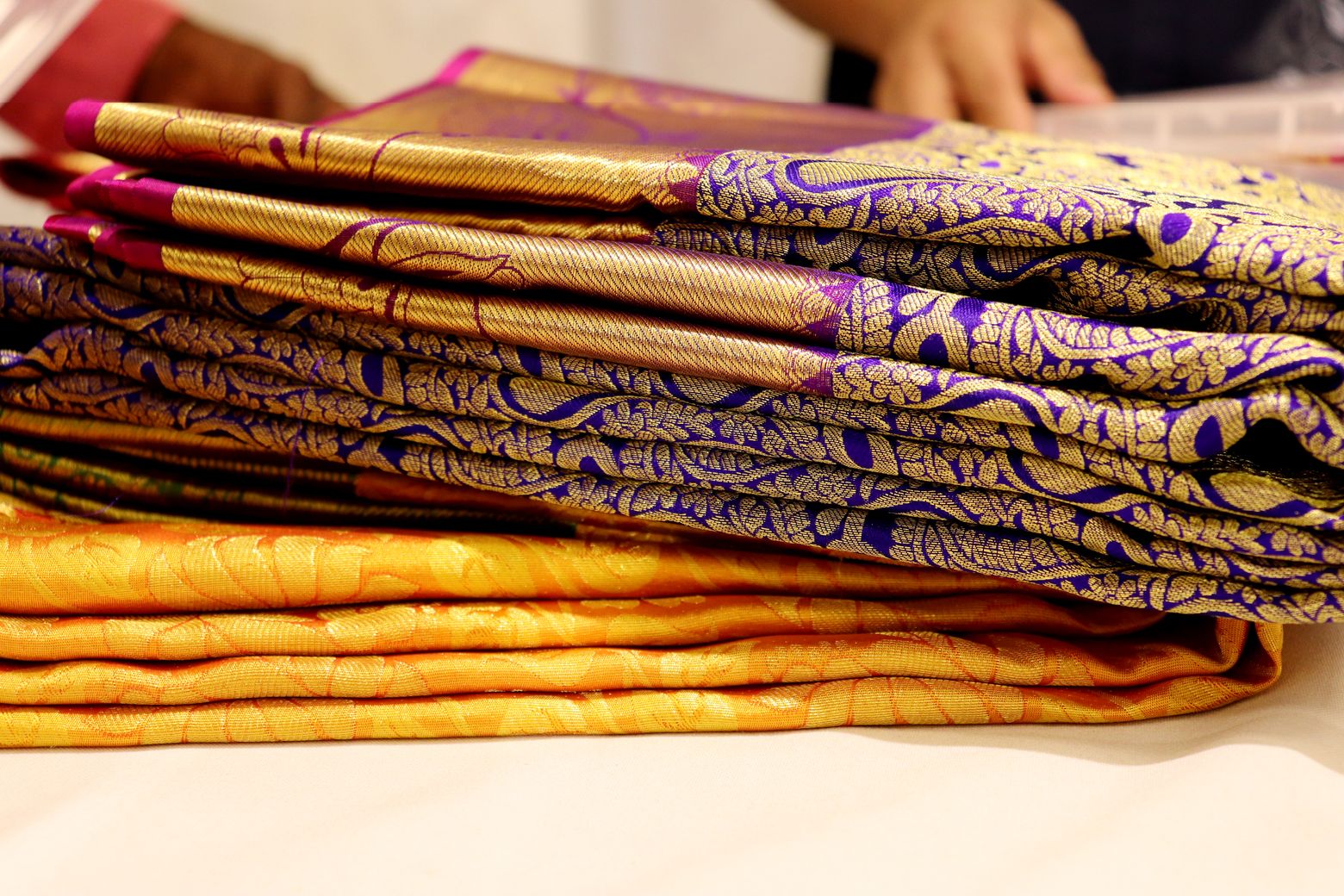
Handloom sarees in Tamil Nadu, colourful Kanchipuram silk sarees with traditional woven borders
Silk sarees photographed in Kanchipuram — editorial stock photograph. Photo: Sharath G. / Pexels · Pexels License
Tamil Nadu textile heritage7 traditionsA modern saree guide
From the editor

“

A saree can hold a family memory, a favourite colour and a whole region’s textile history — all in six graceful yards.

In Tamil Nadu, weaving traditions are as varied as the women who wear them. Some are chosen for a wedding morning; others are loved because they are easy to wear all day. What they share is character: the border, the feel of the yarn, the pallu, the techniques and the people behind them.

This Mosin Boutique journal explores handloom sarees in Tamil Nadu with an everyday shopper’s eye. We will tell you what makes each tradition recognisable, how to style it, and which details to check before buying. Not every saree with a traditional pattern is handwoven — and knowing that difference makes shopping more rewarding.

The collection of stories

Seven saree traditions, seven different moods

From soft cotton to ceremonial silk, these handloom sarees in Tamil Nadu show how much variety exists within a single state.

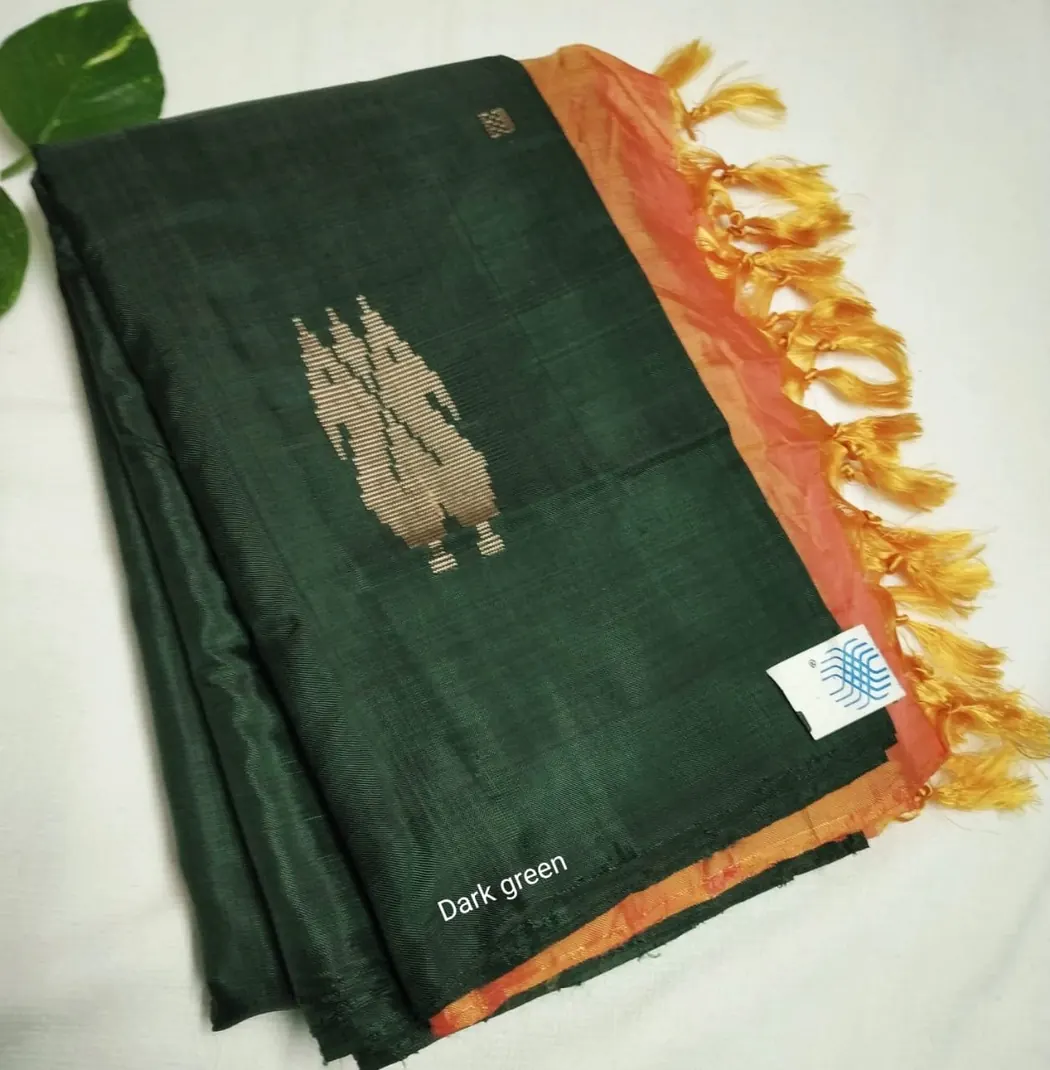
Dark green saree with orange contrast border, gold motif and tassels
Chinnalampattu Sarees — editorial saree photograph supplied for this article.

Chinnalampattu Sarees

A story of colour, ease and a weaving town that keeps reinventing itself.

Some sarees announce themselves with grandeur. Chinnalampattu takes a gentler route: lightweight drapes, pleasant colour play and details that reward a closer look. Often called Chinnalapatti or Chinnala Pattu, this textile tradition comes from the Dindigul region, where generations of weavers have adapted their craft to changing tastes.

There are different constructions sold under the Chinnalampattu name, including silk and silk-cotton styles. An interesting chapter in the town’s weaving story is its use of tie-and-dye and ikat-inspired patterns. That is why fabric composition deserves a closer look than the name alone.

For women who enjoy soft festive dressing without the weight of an elaborate bridal saree, these traditions are a lovely starting point. Among handloom sarees in Tamil Nadu, Chinnalampattu deserves more attention for its approachable elegance.

The Mosin Boutique edit

Mosin Boutique lists its Chinnalampattu-style sarees under the Vazhai Pattu category. Explore that selection, and read each product description for its specific fibre and weaving details.
Explore Vazhai Pattu sarees   ↗Read about the Chinnalapatti weaving tradition ↗
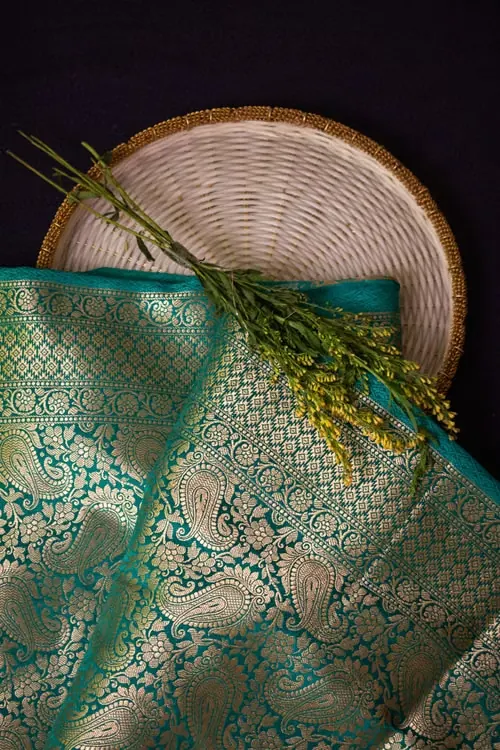
Teal silk saree with ornate gold zari motifs and woven border
Kanchipuram Silk Sarees — editorial saree photograph supplied for this article.

Kanchipuram Silk Sarees

The silk that turns a family occasion into a lasting memory.

A Kanchipuram silk saree rarely needs an introduction in a South Indian home. The rich body, striking border and luminous zari create the kind of elegance many families associate with weddings, festivals and treasured celebrations.

Classic styles may feature temple-inspired borders, checks, stylised flowers or traditional motifs woven into the body and pallu. Details vary between pieces: not every modern saree sold as ‘Kanchi style’ is a traditional Kanchipuram handloom silk saree.

When exploring handloom sarees in Tamil Nadu, Kanchipuram is one of the first weaving destinations to understand. If you are buying for a wedding, read the fibre composition and zari description carefully, and ask about authenticity documentation where it matters to you.

Styling idea

Let a statement border do the work. A simple blouse, jasmine flowers and a favourite pair of earrings can feel more memorable than adding many accessories.

Kanchipuram District’s guide to its GI-recognised silk ↗
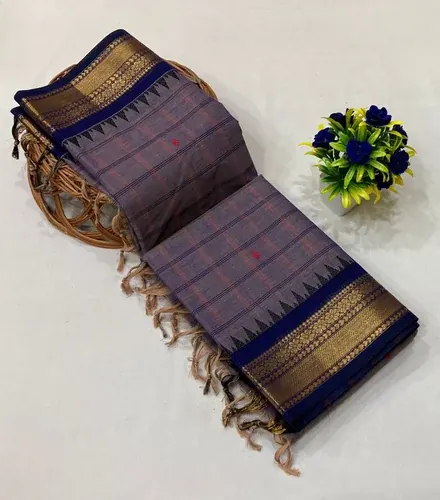
Folded checked saree with navy blue and gold woven border
Kanchi Cotton Sarees — editorial saree photograph supplied for this article.

Kanchi Cotton Sarees

A beautiful answer to the days when comfort matters just as much as colour.

There is a reason a comfortable cotton saree becomes the first choice on so many mornings. It is practical for long hours, looks polished without much effort and works for everything from office routines to a casual family visit.

Kanchi cotton-inspired designs often draw attention with checks, small buttas and contrasting borders. Some are handwoven, while others are produced by mechanised looms; the design alone cannot confirm how a particular saree was made.

For shoppers researching handloom sarees in Tamil Nadu who also want easy-to-wear choices, it makes sense to browse a real store collection and inspect the product description. At Mosin Boutique, the Kanchi Cotton category is a practical place to compare current styles.

Shopping note

Check the listed saree length, whether a blouse piece is included, fabric composition and wash care on the exact product you select.

Shop Kanchi Cotton sarees   ↗View a Kanchi Cotton product at Mosin Boutique ↗
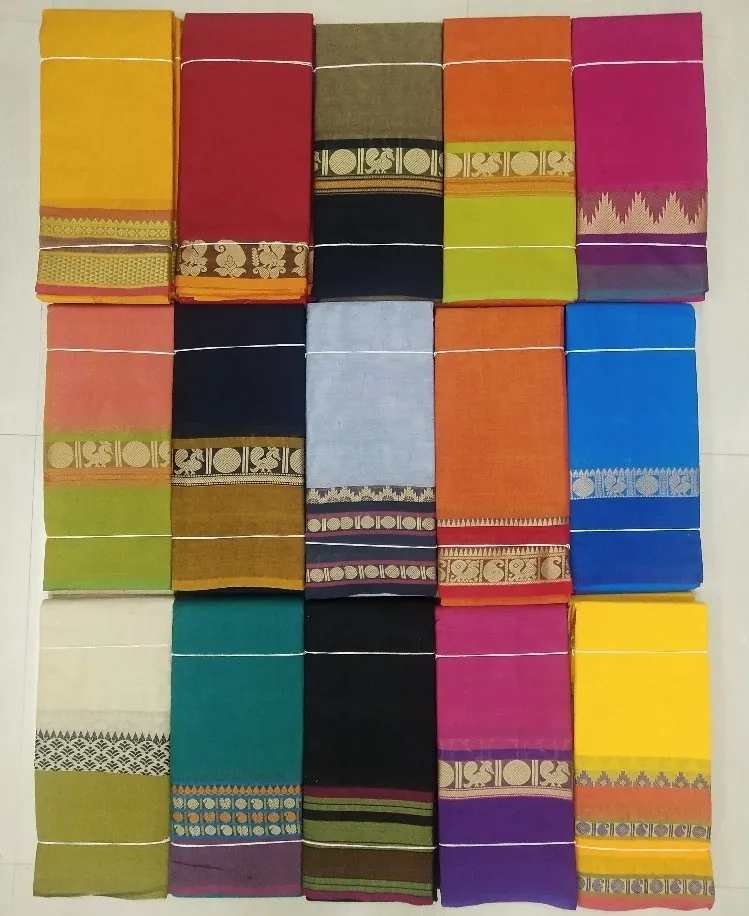
Colourful collection of folded sarees with contrasting woven borders
Chettinad Cotton Sarees — editorial saree photograph supplied for this article.

Chettinad Cotton Sarees

Checks, stripes and quiet confidence: a regional signature with real character.

Think of a striking checked saree that looks complete even with a plain blouse. That is the charm associated with traditional Chettinad cotton, particularly the Kandangi weaving heritage of the Chettinad region.

Older Kandangi designs are known for substantial cotton, earthy shades, bold stripes, checks and contrasting borders. Modern Chettinad-style sarees may reinterpret these details in lighter fabrics and different palettes, but they should not all be described as authentic handwoven Kandangi.

Among the most recognisable handloom sarees in Tamil Nadu, Chettinad cotton reminds us that restrained styling and strong textile design can make an impression without extra embellishment.

Editor’s styling pick

Try a vibrant checked saree with a plain, deep-coloured blouse and small silver jewellery. The cloth itself becomes the statement.

Explore the Ministry of Textiles’ note on Kandangi weaving ↗
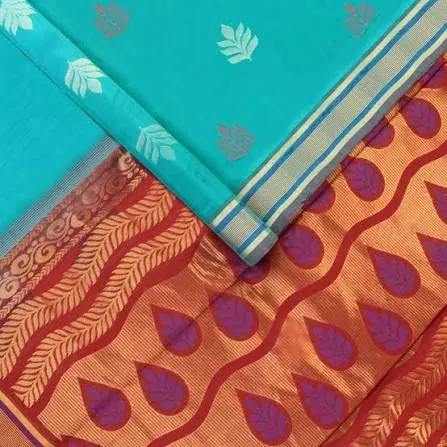
Turquoise saree with a rust orange and purple patterned border
Kovai Kora Cotton Sarees — editorial saree photograph supplied for this article.

Kovai Kora Cotton Sarees

An expressive silk-cotton character with a light, crisp personality.

Coimbatore’s Kovai Kora tradition is a thoughtful blend of two fibres. The classic construction uses raw silk for the warp and mercerised cotton for the weft, giving the finished saree a distinctive crisp handle and elegant appearance.

Bright borders, woven accents and occasional zari detailing give these sarees an occasion-ready look while retaining the individuality of the yarn. Some women enjoy this category when they want a dressy alternative to everyday cotton without choosing a heavy ceremonial silk.

If you are researching handloom sarees in Tamil Nadu by weaving technique rather than just colour, Kovai Kora is a wonderful example. The name is also a registered Geographical Indication, so avoid assuming any vaguely similar silk-cotton saree has the same provenance.

What to look for

Notice the contrast between the body and border, ask for the actual fibre details and check whether the saree has a naturally crisp feel.

See Kovai Kora’s GI registration ↗
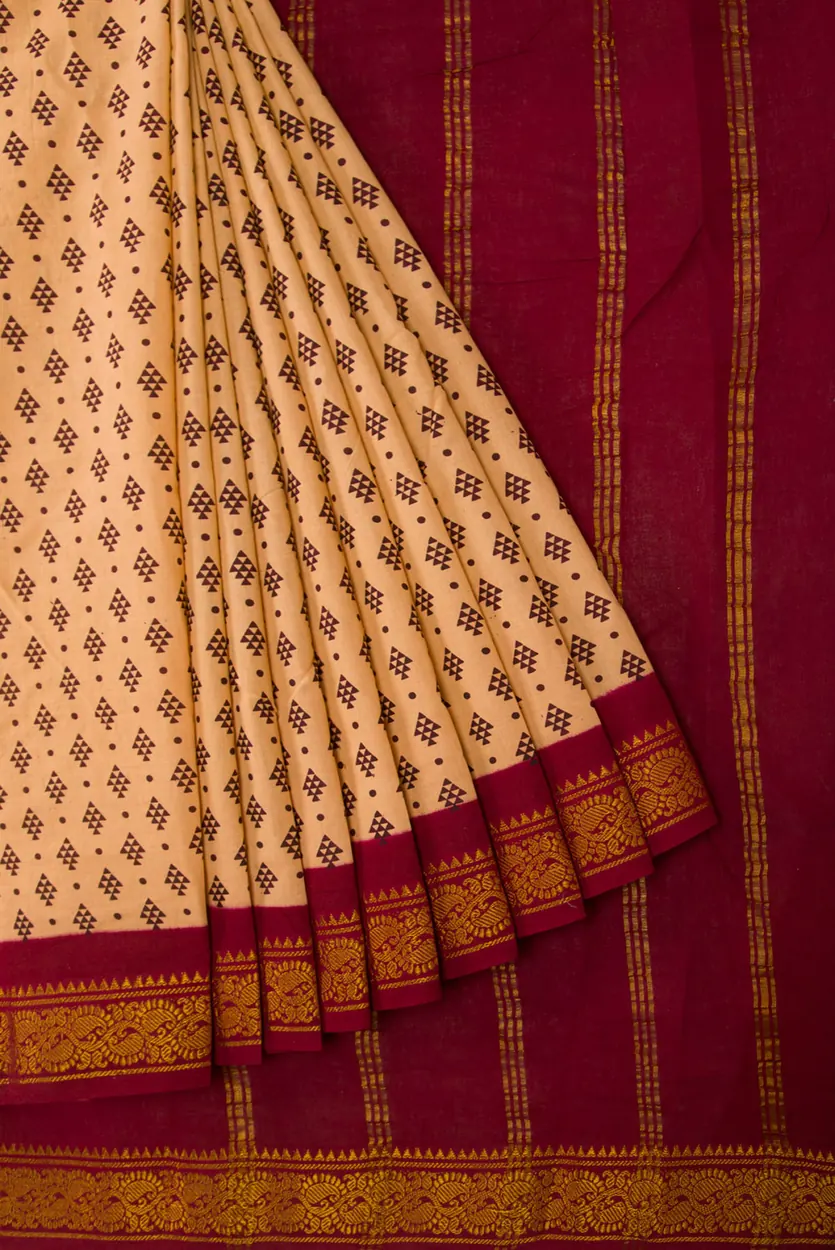
Beige and maroon saree with small geometric printed motifs and decorative border
Madurai Sungudi Sarees — editorial saree photograph supplied for this article.

Madurai Sungudi Sarees

Little dotted patterns, vivid colours and a craft made memorable by the hands behind it.

Madurai Sungudi has a special visual language. Traditional work is known for tied-and-dyed dots, colour variation and borders that can make a simple cotton saree feel distinctive.

In a hand-tied Sungudi textile, the tiny reserved dots are part of a labour-intensive process: sections are tied before dyeing to create the characteristic pattern. Printed imitations also exist, so shoppers should not infer the technique from dots alone.

Across handloom sarees in Tamil Nadu, few styles feel as closely linked to an everyday city as Sungudi does to Madurai. Its charm is the mix of approachable comfort and a very recognisable textile identity.

Wear it your way

Let a dotted saree shine with an understated blouse. Try a simple bun or loose braid for a relaxed traditional look.

Explore Madurai Sungudi’s GI Registry entry ↗
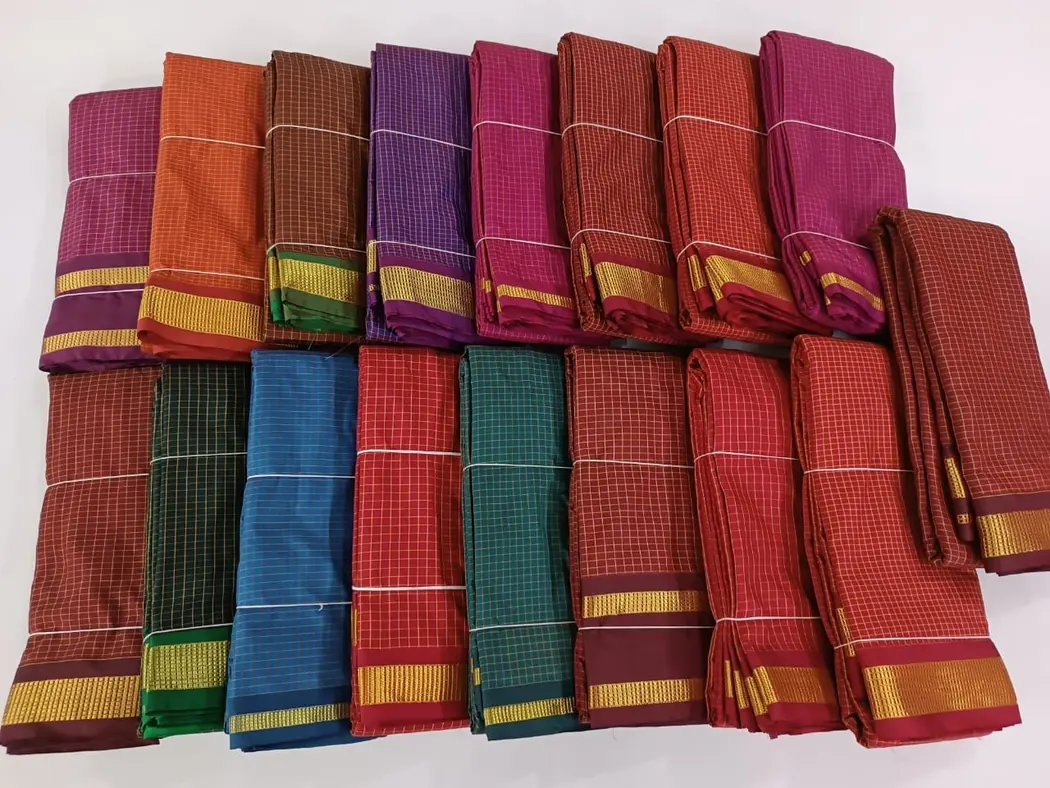
Folded checked sarees in pink, blue, green and red with gold borders
Aarani Silk Sarees — editorial saree photograph supplied for this article.

Aarani Silk Sarees

A graceful weaving legacy that belongs in the conversation about Tamil Nadu silk.

Arani, often written Aarani, is an established silk-weaving centre in the Tiruvannamalai region. Its sarees are appreciated for their woven borders, traditional motifs and range of colours, from understated festive shades to richer ceremonial styles.

When two silk sarees look similar in a photograph, it is tempting to shop by colour alone. But weave, silk type, zari detail and the weight of the finished fabric can change how a saree feels when draped.

For anyone discovering handloom sarees in Tamil Nadu, Arani is worth recognising as a distinct silk tradition rather than simply another generic South Indian silk saree.

The editor’s note

For a rich silk pallu, choose a blouse colour drawn from one of the smaller border motifs. It often looks considered without feeling overly matched.

Government list of GI-recognised handloom products ↗
Shopping with intention

How to choose a traditional saree with confidence

Whether you love silk or cotton, a thoughtful purchase begins with good information.

01 / The buying checklist

Look beyond the colour.

  • Read the fibre composition and the stated weaving method.
  • Check saree length, width, pallu and blouse-piece information.
  • Look for clear close-ups of borders and texture.
  • Read shipping, exchange and care instructions before ordering.
  • For heritage or GI products, request appropriate origin or authenticity information where relevant.
02 / The care ritual

Make your favourite drapes last.

Different yarns and dyes require different care. For silk and richly zari-woven pieces, follow the seller’s recommended professional-cleaning instructions. For suitable cotton sarees, use gentle washing methods only when the care label permits them.

Dry thoroughly before storing, protect delicate borders from friction, and refold occasionally. Good care can make the difference between a saree you wear once and one that becomes a treasured favourite.

Among handloom sarees in Tamil Nadu, there is no single universal care rule: always start with the specific fabric.

From the story to your wardrobe

Find your kind of timeless.

Inspired by the regional stories? Explore actual Mosin Boutique collections. Product pages show current availability and the details of the item you are buying.

Keep reading

Stories worth opening next

If you liked exploring handloom sarees in Tamil Nadu, you may enjoy these practical shopping guides and collections too.

Good questions

Frequently asked questions

Which handloom sarees are famous in Tamil Nadu?

Well-known traditions include Kanchipuram silk, Arani silk, Chettinad Kandangi, Madurai Sungudi, Kovai Kora cotton and Chinnalapatti sarees. Each differs in yarn, design language or method.

Why does Mosin Boutique link Chinnalampattu to Vazhai Pattu sarees?

Mosin Boutique lists Chinnalampattu-style sarees under its Vazhai Pattu category. Product naming can vary by seller; please check each item’s fabric composition and specific weaving details rather than relying on the category name alone.

Are all Kanchi cotton sarees handloom?

No. Some Kanchi-style cotton sarees are handwoven and some are powerloom-made. Check the exact product description and ask the seller if the weaving method is not specified.

What makes traditional Madurai Sungudi distinctive?

Traditional Sungudi is associated with tied-and-dyed patterns, especially small reserved dots. Printed fabrics can imitate this effect, so a dotted pattern alone is not proof of hand-tying.

Which of these sarees can I browse at Mosin Boutique?

You can explore the store’s current Kanchi Cotton and Vazhai Pattu categories through the links in this article. The other regional traditions are included as educational references, not as a claim of in-stock inventory.

How can I identify genuine handloom sarees in Tamil Nadu?

Look for clear fabric and weaving details, reliable seller information and appropriate handloom/origin certifications where offered. A traditional-looking motif by itself is not evidence of handweaving.

A final thought

Every weave has a place in the story.

Some sarees are cherished because they make an important day feel unforgettable. Others become favourites because you can wear them on an ordinary Tuesday and feel entirely yourself.

What makes handloom sarees in Tamil Nadu worth discovering is not simply their heritage but the choices they give us: bold checks, gentle cotton, textured silk, meaningful borders and a way to celebrate regional craftsmanship.

Keep the story in mind, check the product details and choose the saree you will be happy to reach for again.